
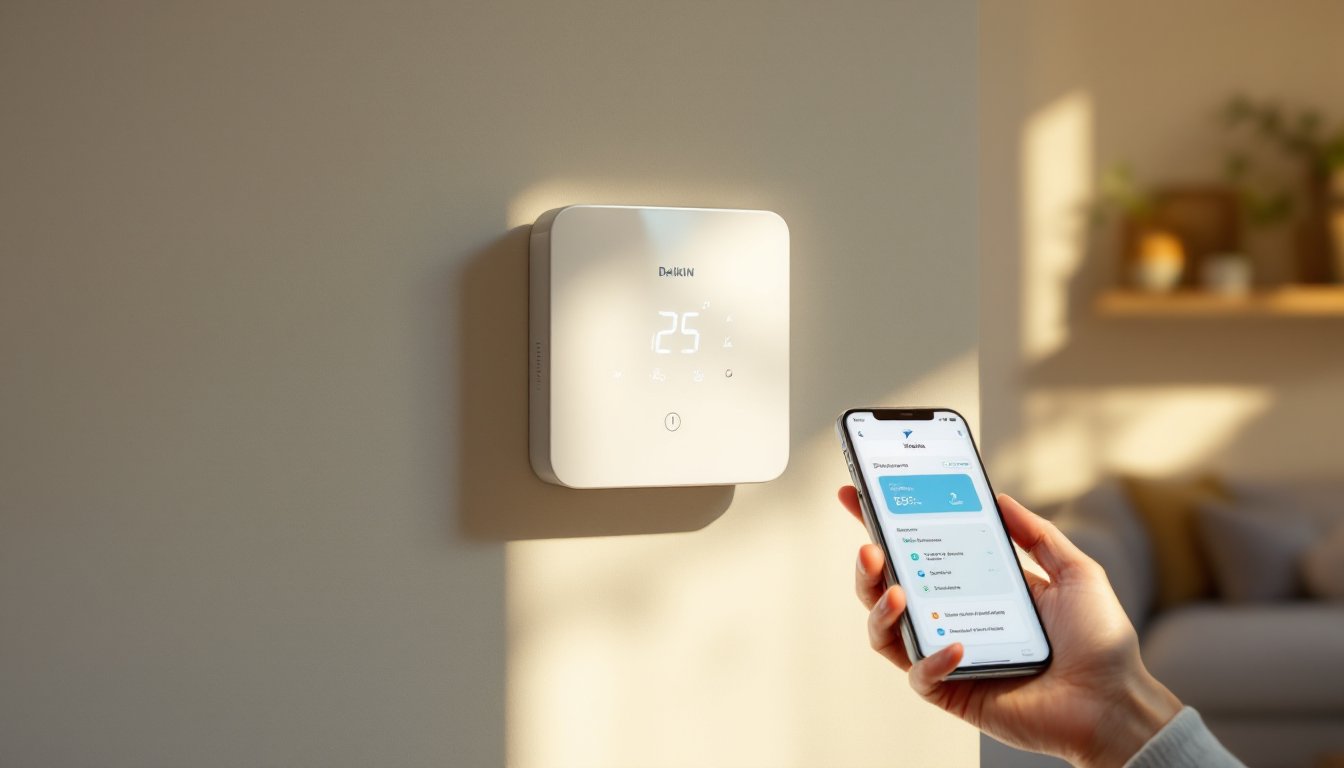

A smart thermostat isn’t just about convenience, it’s about actually cutting your energy bill while you sleep or work elsewhere. The Daikin smart thermostat represents a practical step toward automating one of the biggest energy consumers in any home: heating and cooling. Unlike old dial thermostats that sit on the wall doing exactly what you tell them and nothing more, Daikin’s smart models learn patterns, respond to weather, and let you adjust temperature from your phone. For homeowners tackling climate control upgrades, understanding what Daikin offers, and whether it’s the right fit, matters before reaching for the tools.
Key Takeaways
- A Daikin smart thermostat learns household patterns and automatically adjusts heating and cooling to cut energy bills by 10–15% annually on average.
- Remote access, geofencing, and granular scheduling features allow you to control your home’s temperature from your phone and automatically switch to away mode when no one is home.
- Installation is straightforward if you have a C-wire, typically taking under an hour, but running new wire through walls without one can take 2–3 hours and may require professional help.
- Maximizing savings requires setting realistic schedules, maintaining your HVAC system, and using humidity controls between 30–50% in winter and 40–60% in summer for optimal efficiency.
- A Daikin smart thermostat typically pays for itself within 2–4 years through lower utility bills and works best as part of a comprehensive home energy efficiency strategy, not as a standalone solution.
What Is a Daikin Smart Thermostat?
A Daikin smart thermostat is an internet-connected device that replaces a standard wall thermostat, communicating with your HVAC system to regulate heating and cooling automatically. Daikin, a major HVAC manufacturer, designs these units to integrate with their air conditioning and heat pump systems, though some models work with other brands’ equipment too.
Unlike a conventional thermostat, which simply turns your furnace or AC on and off when temperature hits a setpoint, a smart thermostat gathers data. It tracks indoor temperature, outdoor weather, occupancy patterns, and humidity. The device then makes micro-adjustments to keep your home comfortable while using less energy.
Daikin’s lineup typically includes both WiFi-enabled models for existing HVAC systems and integrated models designed for newer Daikin units. The smart models connect to a mobile app, allowing remote monitoring and control from anywhere you have internet. Most require a C-wire (common wire) for power, though some newer models use wireless protocols. Installation usually replaces your old thermostat’s wiring, a project many homeowners handle themselves, though it’s worth confirming your system compatibility first.
Key Features That Set Daikin Thermostats Apart
Remote Access and Mobile Control
The headline feature of any smart thermostat is the ability to adjust your home’s temperature from anywhere. With a Daikin smart thermostat, homeowners can raise the heat before arriving home on a cold evening or lower the AC while driving back from vacation. The mobile app delivers real-time status, current indoor temperature, humidity, and HVAC runtime.
Geofencing is another practical touch. The thermostat can detect when the last person leaves home and automatically switch to an “away” mode, reducing heating or cooling demand. When the first person approaches home, it can pre-condition the space to a comfortable temperature. Voice control integration (typically through Alexa or Google Assistant) lets you adjust temperature hands-free.
Scheduling is more granular than old programmable models. Instead of four preset times per day, you can set different temperatures for different days and times, or adjust on the fly if plans change. This flexibility matters for households with irregular routines.
Energy Efficiency and Cost Savings
Energy savings are why most people install a smart thermostat. Daikin smart thermostats use algorithms that learn household patterns, when people are home, when they sleep, when rooms are occupied. Over time, the device fine-tunes heating and cooling to avoid wasting energy conditioning empty spaces or running the system at full capacity when partial adjustments work.
Many models include a humidity sensor, which prevents the AC from running longer than needed to reach a setpoint. Some Daikin units also provide usage reports, showing exactly when and how much energy the HVAC system consumed. Seeing that data often prompts behavior changes, like setting a slightly wider comfort band or accepting a couple degrees adjustment.
Real-world savings depend heavily on your climate, how disciplined you are with scheduling, and your existing system’s efficiency. Industry data suggests smart thermostat owners save 10–15% on heating and cooling costs annually, though individual results vary. The thermostat itself, costing $300 to $700 for Daikin models, typically pays back within 2–4 years through lower utility bills.
Installation and Setup Process
Before you touch your thermostat, confirm your system compatibility. Daikin publishes a list of compatible equipment, so check your furnace or air handler’s model number. Most standard forced-air systems work, but some hydronic (water-based) heating or specialty setups may not.
Turning off power at the breaker is your first safety step. Once power is off, remove the cover of your old thermostat and photograph the wire connections, label them if they aren’t already. Most systems use a C-wire (common/ground), R-wire (power), W-wire (heat), Y-wire (cool), and G-wire (fan). Note which terminals they connect to.
The next step depends on your current setup. If you have a C-wire running to your old thermostat, installation is straightforward: disconnect the old unit, connect wires to matching terminals on the Daikin thermostat, secure it to the wall, and reconnect power. If you lack a C-wire, needed for WiFi operation, you’ll need to run one from your furnace or air handler to the thermostat location. This means fishing wire through walls, which turns a 30-minute swap into a 2–3 hour project and often requires a second person to help thread wire.
Once wired, follow the app setup: connect the thermostat to your WiFi network, create an account, and pair the device. Daikin’s interface typically walks you through basic settings, heating and cooling setpoints, schedules, and mode preferences. Most installations are complete within an hour if you already have a C-wire.
How to Maximize Your Smart Thermostat Benefits
Simply installing a smart thermostat won’t automatically cut your energy bill in half. Getting the most from it takes intentional setup and habits.
Start by setting realistic schedules. If you’re home most days, create a routine that matches your actual presence. Set the thermostat lower in winter when you’re asleep (68°F is common) and higher when away. In summer, reverse the logic, set the AC higher when no one’s home, lower when occupied. The goal is avoiding energy waste while maintaining comfort during occupied hours.
Take advantage of learning modes if your Daikin model offers it. Some thermostats adapt their schedules based on observed patterns, adjusting run times or setpoints automatically. Review your usage reports monthly to spot inefficiencies. If heating runtime spikes unexpectedly, it might signal an HVAC maintenance issue.
Humidity control matters more than many homeowners realize. In summer, moisture indoors makes the AC run longer to reach a setpoint. Daikin smart models often let you set humidity limits, keeping indoor humidity between 30–50% in winter and 40–60% in summer improves comfort and efficiency. A dehumidifier or ventilation upgrade can help if your system can’t keep up.
Don’t overlook your HVAC system itself. A smart thermostat managing a dirty furnace filter or a refrigerant-low heat pump is like using a precise GPS while driving on bald tires. Replace filters seasonally, have your system serviced annually, and ensure ductwork isn’t leaking. A well-maintained system paired with smart scheduling delivers the energy savings the tech promises.
Conclusion
The Daikin smart thermostat offers genuine practical value for homeowners willing to set it up properly and use its features intentionally. Remote access prevents wasted heating and cooling when you’re away, while learning and scheduling features reduce energy consumption during occupied hours. Installation is straightforward if you have a C-wire and basic electrical comfort: if not, expect to run new wire or call a professional.
The payoff, lower energy bills, better comfort, and peace of mind from remote monitoring, makes the upfront cost reasonable for most homeowners. The key is treating it as part of a larger approach to home efficiency, not a silver bullet on its own.