
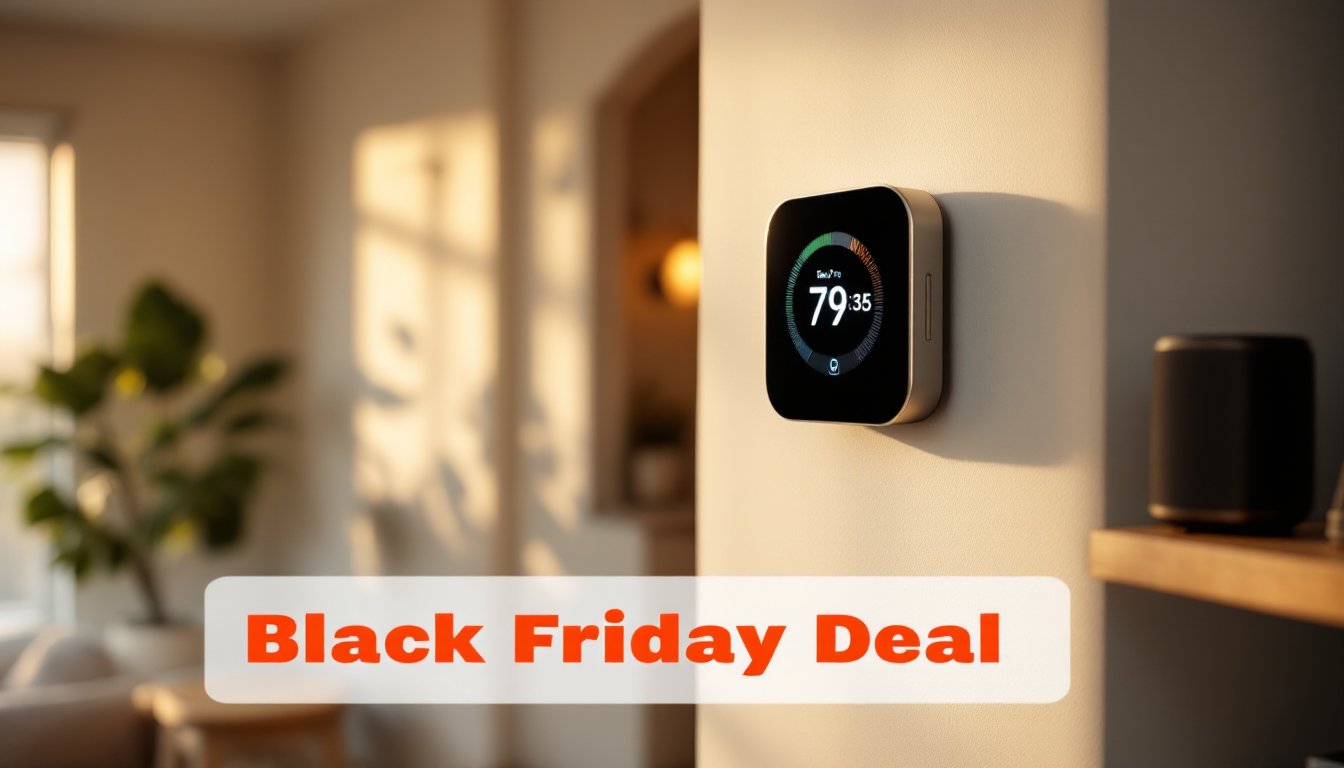

Black Friday smart thermostat deals offer DIYers and homeowners a prime opportunity to upgrade their HVAC control systems without very costly. Smart thermostats have become central to modern home comfort and energy efficiency, reducing heating and cooling costs by 10–15% annually while adding convenience through remote control and automation. With discounts typically ranging from 20–40% during Black Friday, 2026 presents an ideal window to invest in a quality device that pays for itself within months. Whether someone is a first-time smart home adopter or upgrading from a basic programmable model, understanding what features matter most, and where to find the best deals, ensures a smart purchase that aligns with both budget and home automation goals.
Key Takeaways
- Black Friday smart thermostat deals offer 20–40% discounts, bringing quality mid-range models to $100–$150, with homeowners recovering the investment through $10–$25 monthly utility savings.
- Smart thermostats reduce heating and cooling costs by 10–15% annually through learning technology, geofencing, and weather-awareness features that adapt to household patterns and optimize energy use.
- Most smart thermostats install in under an hour without professional help on standard 24V HVAC systems, making DIY installation accessible for homeowners with basic wiring knowledge.
- Prioritize integration with major smart home platforms like Alexa, Google Home, and Apple HomeKit, plus robust Wi-Fi connectivity, to ensure seamless automation and reliable remote control.
- Maximize Black Friday savings by setting price-drop alerts 4–6 weeks early, comparing final shipped prices across retailers, and considering refurbished or open-box models for 30–50% additional discounts.
Why Smart Thermostats Are Worth the Investment
Smart thermostats go far beyond turning up the heat or cooling on a timer. They learn household patterns, adapt to weather changes, and make real-time adjustments to minimize energy waste. A homeowner who installs a quality smart thermostat can expect monthly utility savings that typically range from $10 to $25, depending on climate and existing system efficiency.
From a DIY standpoint, most smart thermostats are straightforward to install in place of an existing unit. The majority work with standard 24V HVAC systems and require basic wiring knowledge, if someone can identify the common C-wire (or work around its absence with a C-wire adapter), installation takes under an hour. No electrician or HVAC technician is required for standard residential installations, though local codes may vary, so a quick check with the building department is wise.
Beyond comfort, smart thermostats integrate seamlessly into broader home automation ecosystems. They pair with voice assistants, security systems, and mobile apps, centralizing control. They also provide detailed energy reports, helping homeowners spot inefficiencies and make informed decisions about usage. These features justify the upfront cost, especially when Black Friday discounts drop the price to $100–$150 for solid mid-range models.
Top Smart Thermostat Features to Look For
Learning Technology and Energy Optimization
The most advanced smart thermostats employ machine learning to study occupancy patterns and adjust temperatures proactively. These systems recognize when residents are home, away, or asleep and shift setpoints accordingly. Geofencing, which uses smartphone location data, pairs with learning algorithms to pre-cool or pre-heat before residents arrive, reducing the time the HVAC system runs at full capacity.
Energy optimization extends to weather awareness. Many smart thermostats pull real-time weather forecasts and adjust heating or cooling in anticipation of temperature swings. A system predicting a cold snap will gradually bring the house temperature up before it hits 20°F outside, rather than forcing the furnace to overwork when the cold arrives. This smooths energy demand and cuts peak usage.
Also look for humidity control features. Some smart thermostats can trigger humidifiers or dehumidifiers to maintain comfort without blasting conditioned air unnecessarily. This is particularly valuable in dry winters or humid summers and prevents the discomfort, and higher energy use, that comes from extreme indoor humidity swings.
Remote Control and Smart Home Integration
True remote access means adjusting temperature from anywhere via a smartphone app, not just on a schedule set at home. This flexibility is especially useful when someone is away for an unexpected weekend trip or realizes the house was accidentally left too cold while traveling. Real-time push notifications alert homeowners to HVAC problems, like a broken heating cycle or a filter due for replacement.
Integration with major smart home platforms, Amazon Alexa, Google Home, Apple HomeKit, ensures the thermostat works within an existing ecosystem. Voice commands (“Alexa, set the temperature to 72°F”) streamline daily adjustments. Many premium models also support IFTTT (If This Then That) automation, linking the thermostat to other devices. For example, a homeowner could create a rule that raises temperature automatically if the smart door sensor detects an open window.
Compatibility with the home’s Wi-Fi system is non-negotiable. Ensure the model supports dual-band routers and has robust connectivity reviews. Poor Wi-Fi signal in the thermostat’s location can disrupt remote control and automation reliability. A few high-end models include a separate hub to extend range: this adds cost but guarantees stable connection in larger homes.
How to Maximize Savings on Black Friday
Black Friday smart thermostat deals typically begin in early November and extend through Cyber Monday. Major retailers, Amazon, Best Buy, Home Depot, Lowe’s, often advertise discounts 4–6 weeks beforehand, so setting up price-drop alerts on targeted models is a practical first step. Many retailers offer an additional 5–10% discount to credit card members or loyalty program subscribers, so reviewing those incentives before checkout saves money.
Bundle deals are another angle. Some retailers offer discounts when pairing a smart thermostat with a SMART HVAC filter subscription or energy-monitoring add-ons. While bundles aren’t always the cheapest per-item option, they can provide genuine value if the included products are useful. Read the fine print to avoid obligatory subscriptions that drive up annual costs.
Timing matters. Early Black Friday shoppers often catch inventory at full discount, while late buyers risk sold-out models or price reductions narrowing as stock dwindles. Mid-week deals, particularly on Wednesday or Thursday before the weekend, sometimes offer the deepest discounts on slower-moving stock. For online orders, comparing final shipped prices (including tax and delivery) provides a true comparison: a $40 discount doesn’t help if shipping adds $30.
Refurbished or open-box models deserve consideration. These carry warranties and are heavily discounted, sometimes 30–50% off retail, yet function identically to new units. Retailers like Best Buy and Amazon clearly label these: they’re legitimate options that ease budget constraints. Finally, holding off on ancillary purchases (extra sensors, hubs, extended warranties) until a second sale event, like holiday or tax season, can stretch the overall savings budget across the full home automation vision.
Conclusion
Smart thermostat Black Friday deals in 2026 represent a genuine opportunity to upgrade home comfort and energy efficiency at a meaningful discount. By prioritizing learning algorithms, remote control capability, and smart home integration, homeowners can select a model that fits both their immediate needs and future automation plans. A methodical approach to deal-hunting, setting alerts, comparing final shipped prices, and considering refurbished options, ensures the best value. With savings starting from the first month and benefits compounding over years, a smart thermostat purchased on Black Friday is an investment that keeps paying dividends long after the sale ends.