
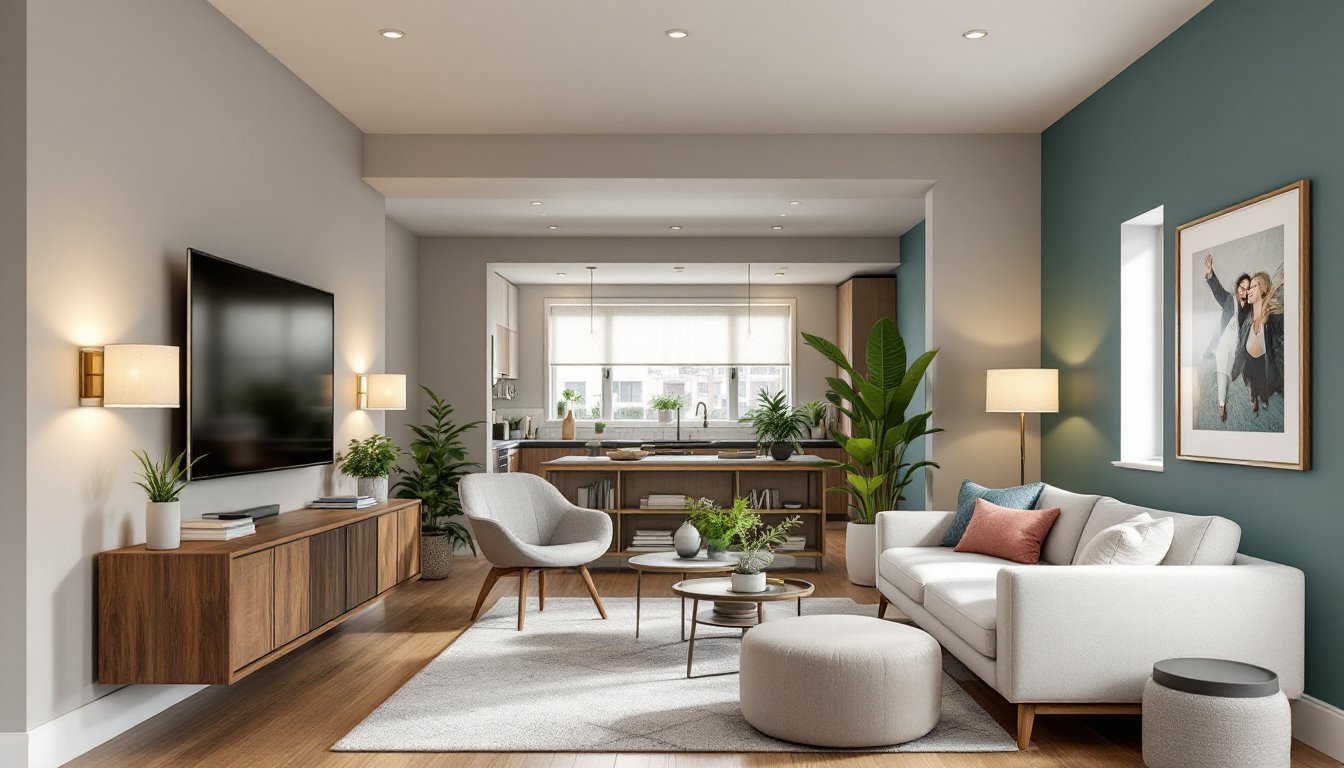

Townhouse living rooms are often limited in size, requiring every square metre to serve multiple purposes. Unlike larger suburban homes, these spaces may function as an entryway, entertainment area, and even a home office all at once. The challenge isn’t simply fitting furniture into the room—it’s creating a layout that feels spacious, practical, and welcoming. With thoughtful planning, a balanced colour palette, strategic lighting, and smart space essentials, even the most compact townhouse can feel open, comfortable, and effortlessly stylish.
Key Takeaways
- Float furniture away from walls and arrange seating in conversational clusters to create the illusion of space and avoid a cramped townhouse living room layout.
- Use neutral base colors (soft grays, warm whites, or greige) on three walls with one bold accent wall to reflect light and expand perceived room dimensions without looking sterile.
- Layer three types of lighting—ambient, task, and accent—with recessed lights or semi-flush fixtures and dimmers to add depth, mood, and make the space feel larger.
- Select proportional furniture scaled to your townhouse, choosing sofas under 84 inches with visible legs and light upholstery that lets the room breathe rather than dominating the space.
- Incorporate smart storage solutions like built-in shelving, floating shelves, low consoles, and ottomans with hidden storage to eliminate clutter and maintain the open feel of small living rooms.
Make Your Townhouse Living Room Feel Bigger With Smart Layouts
The biggest mistake townhouse owners make is pushing all furniture against the walls. Yes, it sounds counterintuitive, but floating a sofa or arranging seating in a loose cluster actually creates the illusion of space and makes the room feel intentional rather than cramped.
Start by identifying the room’s natural focal point, usually a window, a TV, or a fireplace. Arrange seating to face that focal point, leaving at least 18 inches of space behind the sofa for walkthrough. This breathing room is essential: it signals openness even in a compact footprint.
If the living room opens directly into a kitchen or dining area, use a low console table or a modest bookshelf as a visual boundary without blocking sightlines. This defines the living room zone while keeping the entire space feeling connected. A 4-foot-tall bookshelf works better than a 6-footer in tight quarters because you can see over it, which maintains visual flow.
Angle furniture slightly, rather than arranging pieces parallel to walls, to create dynamic sight lines and soften the rectangular feel common in townhouses. Even a 15-degree angle can make a layout feel more organic. Avoid placing a loveseat directly opposite a sofa: instead, position it at a 90-degree angle to create a more conversational arrangement that uses floor space more efficiently.
Choose Colors and Lighting That Transform Small Spaces
Color and light are the invisible architects of perceived space. A townhouse living room painted in warm grays or soft whites feels larger immediately: dark colors absorb light and compress space visually. The trick is avoiding a sterile, generic look while staying light enough to maximize airiness.
Neutral Base Colors With Bold Accent Walls
Start with a neutral base color on three walls, think soft grays (Benjamin Moore’s Revere Pewter or Sherwin-Williams’ Urbane Bronze for slightly warmer tones), warm whites, or greige (a gray-beige blend). These colors reflect light and expand the perceived room dimension. One accent wall, usually the wall opposite the entry or the one with a window, can go bold: a deep teal, muted sage, or rich charcoal. This focal wall adds personality without overwhelming the space. The contrast actually makes the room feel more intentional and designed rather than just “small.”
Avoid high-gloss paint finishes in living rooms: they create glare and feel cold. Use satin or eggshell finishes instead. They’re durable, wipeable, and reflect light gently without the flat, dead look of matte finishes.
Layered Lighting for Depth and Mood
Where most townhouse living rooms fail is lighting. A single overhead fixture leaves harsh shadows and flattens the space. Instead, layer three types of light: ambient (ceiling fixture or recessed lights), task (a reading lamp beside a chair), and accent (a wall-mounted sconce or LED strip behind a bookshelf).
Recessed lighting is the best friend of townhouse living rooms, it’s invisible, doesn’t clutter the ceiling, and distributes light evenly. If recessed lights aren’t an option, a semi-flush ceiling fixture with an opal glass diffuser softens light without eating headroom like a traditional chandelier. Table lamps on side tables or floating shelves add warmth and make the room feel layered and sophisticated. Install a dimmer switch on the main light circuit: it lets you adjust the mood and actually makes the space feel larger when dimmed (brightness can feel exposing in small rooms).
Furniture Selection and Arrangement for Townhouses
Townhouse living room furniture must earn its place. Skip the oversized sectional that eats half the room and opt instead for a 72-inch sofa (standard townhouse-friendly depth is 32–36 inches) paired with a single accent chair or a low ottoman. This gives flexibility: you can move pieces around for gatherings or create an asymmetrical layout that feels less formal.
Leg furniture instead of skirted pieces keeps sightlines open and makes even bulky pieces feel lighter. A sofa on wooden legs “floats” visually and allows you to see the floor, which is critical in compact spaces. Avoid glass tabletops in favor of solid surfaces, they’re easier to style with books, plants, and decor without looking cluttered.
Measure your doorways, hallways, and corner clearances before buying anything. Many townhouse owners buy a beautiful sofa online, only to find it’s 4 inches too wide to angle through the living room entry. Standard doorways are 32–36 inches wide: sofas should be no more than 84 inches long if you need to maneuver them at all.
Choose a furniture scale proportional to the room. An oversized sectional makes a small space feel cramped: smaller scaled pieces allow the room itself to breathe. Look for sofas with higher legs (6–8 inches) and avoid low platform-style frames that sit nearly on the floor, they feel heavier visually. Light upholstery colors or patterns read as less dominant than dark, solid fabrics.
Storage Solutions That Don’t Compromise Style
Clutter makes small spaces feel smaller. Smart storage is non-negotiable in a townhouse living room. Built-in shelving along one wall, ideally above a radiator or window seat, maximizes vertical space without stealing square footage like standalone cabinets. Open shelving is trendy, but in a townhouse, a mix of open shelves and closed cabinet space works better: it lets you hide remote controls, chargers, and the mess while displaying books, art, and plants on open shelves.
Wall-mounted floating shelves at varying heights create visual interest and don’t block floor space. Space them thoughtfully, typically 12–16 inches apart, and style each with a few quality pieces (a plant, a framed photo, a stack of coffee table books) rather than every inch of real estate. This curated look makes the space feel intentional rather than cluttered.
Consider a low credenza or console as a media stand and storage hybrid. These typically run 48–60 inches wide, provide closed storage for electronics and clutter, and keep the wall space above them open for a TV or artwork. A media console with doors hides unsightly cables and components while keeping the living room polished.
Under-sofa storage (rolling bins or lift-top ottomans) captures otherwise wasted space. An ottoman with storage serves double duty: extra seating, a footrest, and hidden storage for blankets or seasonal decor. Just keep the top styling minimal, one throw blanket and a tray with a candle, to avoid visual heaviness.
Conclusion
A townhouse living room doesn’t have to feel like a closet. By floating furniture, layering light, choosing colors strategically, and prioritizing smart storage, even a 200-square-foot living room can feel spacious, functional, and inviting. The key is intentionality: every piece should serve a purpose and contribute to the sense of openness. Start with layout, add light and color, then furnish thoughtfully. Small spaces reward restraint and planning, and a townhouse living room done right becomes the most-used, best-loved room in the home.