
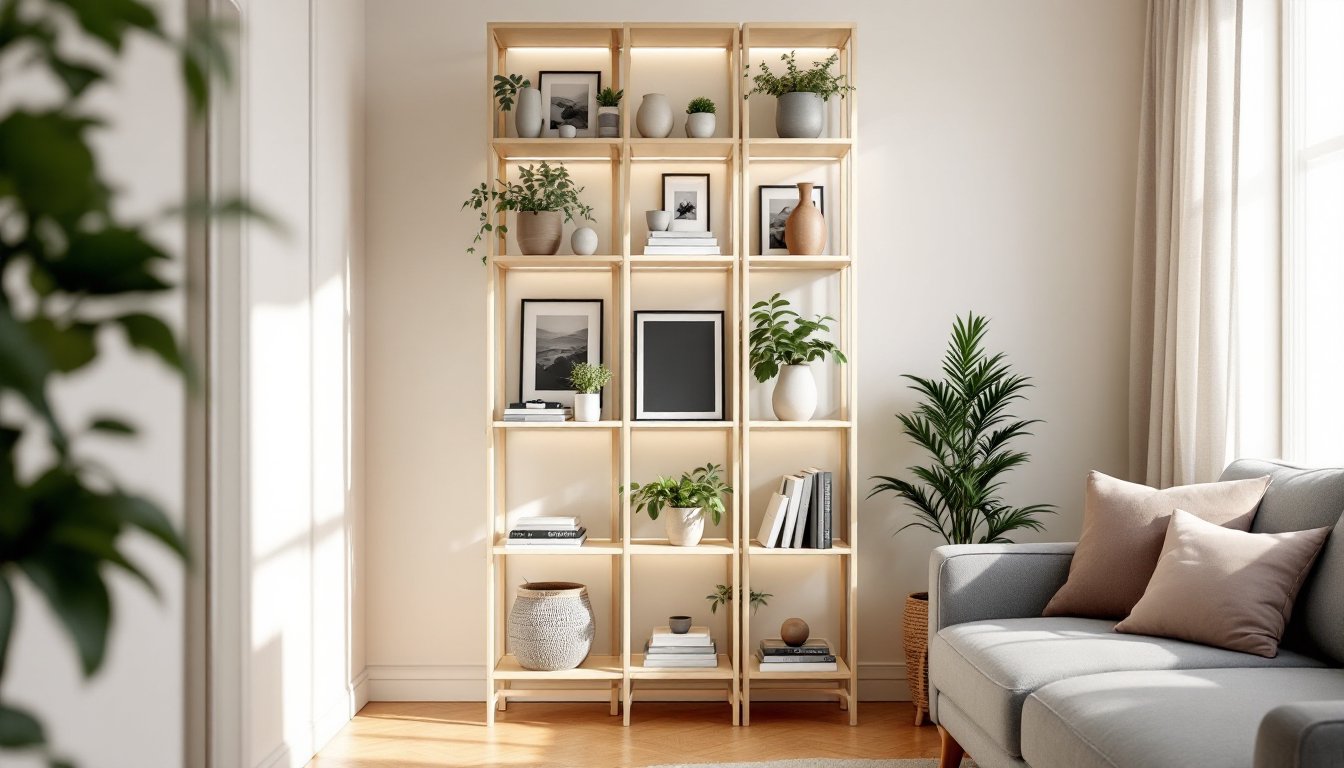

A small living room doesn’t need to mean cramped storage or sterile design. Bookshelves offer a smart solution that tackles both problems at once, adding functional storage while elevating the room’s visual appeal. Unlike freestanding furniture that eats floor space or eating into wall footprint, thoughtfully placed bookshelves can anchor a compact room, create visual interest, and display personality without overwhelming the area. Whether someone is working with a studio apartment, a cozy cottage, or a city condo, bookshelves become the design workhorse that transforms small living rooms into spaces that feel intentional, organized, and genuinely livable. The key lies in choosing the right style, planning layout with precision, and styling with restraint.
Key Takeaways
- Bookshelves provide vertical storage for small living rooms without consuming floor space, creating the optical illusion of taller ceilings and more expansive areas.
- Freestanding bookcases measuring 72–84 inches tall and 30–36 inches wide are the most flexible choice for small living rooms, requiring no installation and allowing repositioning as layout needs change.
- Follow the 60-30-10 styling rule—60% books, 30% decorative objects, and 10% empty space—to prevent shelves from feeling cluttered while maintaining visual interest and intentionality.
- Strategic placement in corners or as a dedicated accent wall maximizes unused space and anchors the room without blocking natural light or narrowing traffic patterns.
- Light-colored shelves and shallow shelf depths (8–10 inches) make small living rooms feel airier, while LED strip lighting adds depth and dramatically improves the space’s evening ambiance.
- Pairing a bookshelf accent wall with mirrors and maintaining design consistency with existing furniture creates a unified, intentional aesthetic that prevents small rooms from feeling cluttered.
Why Bookshelves Are Perfect for Small Living Rooms
Bookshelves solve a unique problem for small living rooms: they provide vertical storage without consuming precious floor space. When square footage is limited, going up instead of out is the cardinal rule. A floor-to-ceiling bookshelf or a tall unit that reaches 7-8 feet tall instantly draws the eye upward, creating the optical illusion of taller ceilings and a more expansive room.
Beyond the visual trick, bookshelves offer flexibility that built-in cabinetry or storage benches don’t. They’re adjustable, shelves can be repositioned to fit books, decorative objects, photos, or plants. That adaptability matters when a person’s needs change. Bookshelves also break up large wall expanses. In a small room with minimal furniture, a populated bookshelf becomes an accent wall that adds texture, color, and depth without requiring paint, wallpaper, or renovation.
From a practical standpoint, bookshelves are straightforward to install. A fixed wall-mounted unit doesn’t require extensive carpentry: most homeowners or renters can mount shelves using a stud finder and proper anchors. Freestanding models need zero installation and can move if the layout shifts. Finally, bookshelves rarely need permits or professional installation, making them one of the most accessible storage solutions for renters and homeowners alike.
Choosing the Right Bookshelf Style and Size
The bookshelf market offers three main categories: freestanding units, wall-mounted shelves, and built-in shelving. For small living rooms, freestanding bookcases are the most forgiving choice, they don’t require wall studs or installation and can be repositioned if the room’s layout changes. Look for units that are 72–84 inches tall and 30–36 inches wide. These dimensions maximize vertical storage while staying proportional to a compact room.
Wall-mounted shelving, by contrast, anchors to studs and creates a cleaner, more integrated look. This style works best in rooms where the bookshelf is a permanent fixture. Homeowners should use a stud finder to locate wall studs (typically spaced 16 inches apart) and secure shelves with heavy-duty brackets rated for the weight. Never rely on drywall anchors alone for loaded shelves, use studs.
Built-in shelving is the most sophisticated but also the most labor-intensive option. It requires carpentry skills or a contractor. Unless someone is planning to stay in the space for years, built-ins may not justify the cost and effort for a rental.
Vertical vs. Horizontal Shelving Solutions
Vertical shelves run floor to ceiling, maximizing height. They’re ideal for narrow spaces and create drama: drawbacks include visual heaviness if overstuffed. Horizontal shelves sit lower, feel more casual, and work well in rooms with lower ceilings or where wall space is fragmented. A practical hybrid approach uses one tall vertical unit as an anchor point and pairs it with shorter floating shelves elsewhere. This breaks up monotony and accommodates different object sizes, tall decorative pieces on the vertical unit, smaller items on floating shelves.
Smart Layout Strategies for Maximum Impact
In a small living room, bookshelf placement makes or breaks the design. The goal is to anchor the room without blocking natural light or narrowing the floor plan further. Corner placement is often ideal, a tall unit in the corner maximizes unused space and creates a visual boundary without eating into the room’s center.
Another strong strategy is the accent wall approach: dedicate one wall (typically behind a sofa or opposite an entry) entirely to shelving. This draws focus and creates a gallery effect. If the wall is 10–12 feet wide, a pair of 36-inch-wide units with a 12–24 inch gap creates rhythm and breaks up visual monotony.
Avoid placing bookshelves near windows or doors, as they block light and create awkward traffic patterns. Also, resist the urge to fill every wall. A small room with shelving on three walls feels cluttered and oppressive. One bold accent wall or corner unit is far more effective.
For apartment dwellers or renters, freestanding placement near but not touching the wall gives flexibility, the unit can be moved for cleaning or reconfiguration. Weight distribution matters too: loaded shelves are heavy. Make sure the floor underneath can handle the load and that the unit sits level on all four feet. Uneven floors are common in older buildings: use shims (thin wedges) to stabilize.
Styling and Organizing Your Bookshelves
Cramming every shelf with books creates visual noise. Successful small-room styling uses the 60-30-10 rule: 60% books, 30% decorative objects (plants, framed photos, sculptures), and 10% negative (empty) space. That empty space is crucial, it’s what prevents the shelves from feeling like a library storage system rather than a design element.
Organize books by category first (fiction, reference, travel guides), then by size within each category. Horizontal stacking works for coffee table books and large formats: vertical stacking suits standard paperbacks and hardcovers. Vary the orientation, some spines out, some flat, some leaning at angles, to create visual interest.
Decorative objects should relate to the room’s color palette and the person’s actual interests. A single well-chosen plant or vase does more than a collection of mismatched trinkets. Group similar items (three framed photos, a pair of wooden bowls) rather than scattering singles throughout. This creates visual weight and intentionality.
Lighting is often overlooked. Even in a small room, LED strip lighting mounted above shelves or recessed into the underside of shelves dramatically changes how the space feels in the evening. It adds depth, highlights objects, and makes the room feel larger. These strips are affordable and plug into standard outlets, no rewiring required.
Design Tips to Make Your Space Feel Larger
Color and finish matter enormously in small rooms. Light-colored shelves (white, light gray, natural wood tones) recede visually and make the space feel airier than dark finishes. If the bookshelf has a back panel, consider painting it the same color as the walls or a slightly lighter shade, this minimizes visual weight.
Mirrors are a small room’s secret weapon. A mirror leaned against shelves or mounted on an adjacent wall reflects light and doubles the perceived space. Pairing a bookshelf accent wall with a mirror on the opposite wall creates depth and brightness.
Shelf depth also affects perception. Shallow shelves (8–10 inches deep) feel less imposing than 12-inch-deep units in tight quarters. Thinner shelves give the impression of openness and lightness, even when fully loaded.
Final tip: maintain consistency between shelves and other furniture. If the room has mid-century modern pieces, choose a bookshelf with clean lines and tapered legs. If the aesthetic is rustic or farmhouse, a reclaimed wood unit with adjustable metal brackets fits better. Unified design language makes small rooms feel more intentional and collected, not cluttered.
Conclusion
Small living rooms with thoughtfully chosen and styled bookshelves become spaces that work harder and feel larger. The key is selecting the right unit size and style, placing it strategically to anchor without overwhelming, and filling it with intention rather than excess. Whether mounting shelves to studs or going freestanding, the investment in smart storage design pays dividends in both function and visual appeal, turning compact rooms into comfortable, curated homes.