
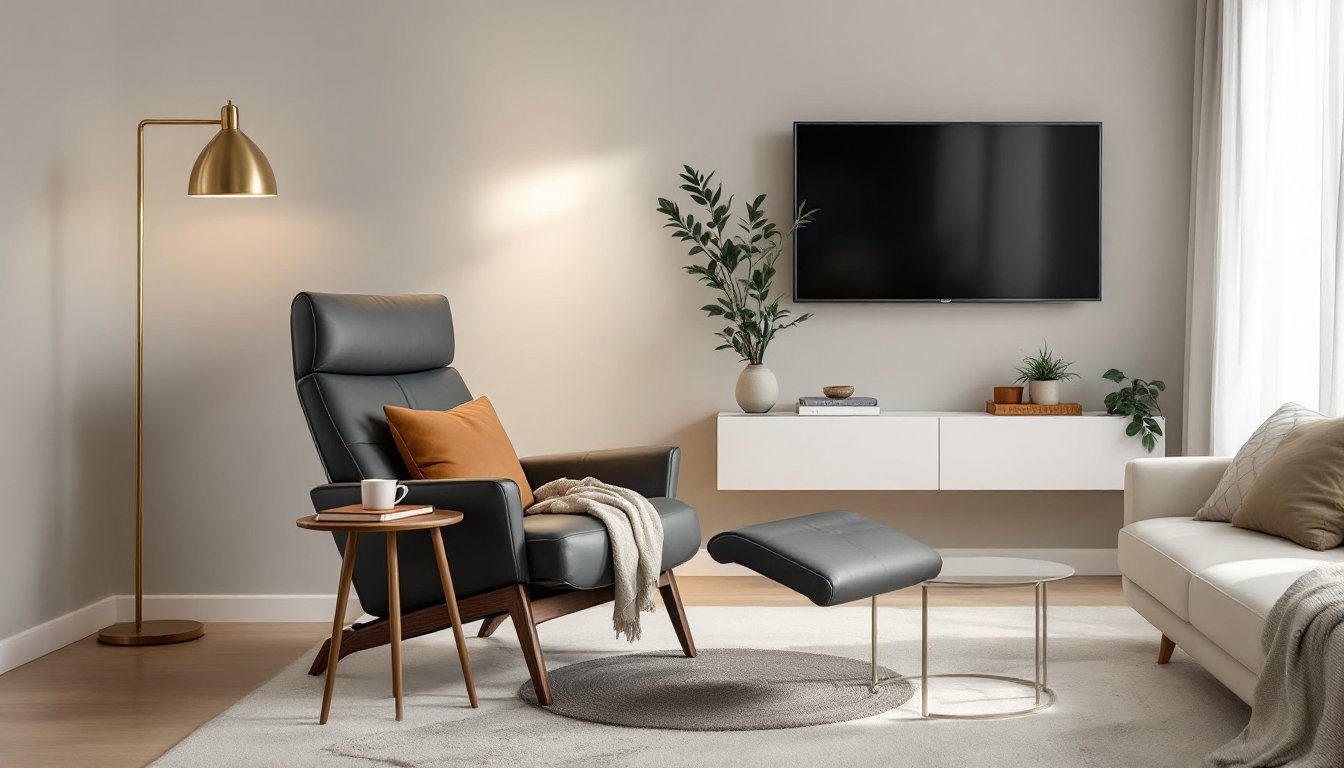

Adding a recliner to a small living room doesn’t have to feel cramped or awkward. The right chair, placed strategically, can actually make a compact space feel more comfortable and intentional. Most people assume recliners demand sprawling square footage, but modern designs prove otherwise. Wall-hugger models, compact frames, and thoughtful arrangement can turn even a tight room into an inviting retreat. This guide covers everything, from selecting the right recliner style to arranging furniture for genuine flow, so homeowners can enjoy both comfort and functionality without sacrificing square footage.
Key Takeaways
- Wall-hugger recliners require only 3–4 inches of rear clearance, making them the ideal choice for small living room ideas where traditional models would feel cramped.
- Strategic angling of the recliner at 20–30 degrees to the focal point and keeping 18–24 inches of walking space creates genuine flow and prevents the room from feeling squeezed.
- Light, neutral-colored recliners with slim legs and smooth materials like leather or microsuede visually expand small spaces better than dark, bulky alternatives.
- Pairing a compact recliner with a side table on wheels, floor lamp, and tall narrow bookshelf transforms it into a functional reading or meditation zone without competing for space.
- Floating the recliner away from walls in open-plan spaces creates intentional purpose zones and makes the room feel larger and more organized than wall-hugging every piece.
Choose Space-Saving Recliner Styles
Wall-Hugger and Compact Models
Wall-hugger recliners are the gold standard for small spaces. Unlike traditional models that need 12–18 inches of clearance behind them to fully recline, wall-huggers require only 3–4 inches. They work by pushing the footrest forward instead of the entire chair back, so they don’t dominate a room’s footprint.
When shopping for a wall-hugger, pay attention to the seat depth and overall width. A seat depth of 32–36 inches works well in tight rooms, and a width around 30–33 inches keeps the profile slim without feeling claustrophobic. Test the recline angle too, some models offer a more moderate 140–160 degree recline, which is plenty for most people and takes up less space than a full 180-degree lay-flat design.
Compact recliners go further. These stripped-down versions have a narrower frame, sometimes as little as 28 inches wide, and lighter-duty recline mechanisms. They won’t handle heavy daily use like a full-size model, but for a reading nook or occasional lounging, they’re ideal. Materials matter here, leather and microsuede hug the frame better than loose fabric, which adds visual bulk.
Swivel Recliners and Rocker Options
Swivel-base recliners turn a stationary seat into furniture with directional flexibility. They let occupants rotate to watch TV, chat with someone across the room, or angle toward a window without moving the entire chair. In a small room, this adaptability stretches perceived space because one piece can serve multiple sight lines.
Rocker recliners combine gentle back-and-forth motion with reclining capability. They don’t require clearance behind them like traditional rockers do, making them less disruptive in tight layouts. The gentle motion also adds a calming presence without eating extra floor area. Pair a rocker-recliner with a side table and lamp, and it becomes a focused retreat zone rather than a floor hog.
Both swivel and rocker styles work best when the frame itself stays compact (under 32 inches wide). Look for models with sturdy but slender legs or bases, chunky platforms add visual weight and make the room feel smaller.
Arrange Your Furniture for Maximum Comfort and Flow
Strategic Placement and Angling Techniques
Placement makes or breaks a small-room layout. Start by identifying the room’s natural focal point, usually a TV, fireplace, or window. Position the recliner at a slight angle (20–30 degrees) to this focal point rather than dead-on. Angling frees up wall space, creates visual breathing room, and makes the chair feel like a considered accent rather than a blocking boulder.
Corner placement works only if the recliner is truly compact and the room layout allows viewing angles. A wall-hugger in a corner paired with a small side table beside it creates a cozy reading zone without hogging circulation paths. Avoid placing recliners directly in doorways or between other furniture pieces, traffic flow suffers, and the chair feels squeezed in.
If the room has limited wall space, consider a floating arrangement: position the recliner away from walls, creating a conversation zone that divides the room into purpose areas (TV-watching zone, reading zone, entry). This trick works especially well in open-plan apartments where living areas blend into kitchens or bedrooms. Floating furniture also makes compact spaces feel intentional and larger, not cramped.
Keep at least 18–24 inches of walking space around the recliner. This buffer prevents stubbed toes and maintains the room’s usability when the chair is reclined. If space is truly tight, consider a swivel model that rotates rather than sprawls, reducing the footprint impact during use.
Lighting matters too. Place a floor lamp or wall sconce near the recliner to define the zone and add depth to the room. Task lighting encourages the recliner’s use as a functional spot, not just decor.
Maximize Visual Space With Color and Materials
Color and material choices affect how spacious a small living room feels. A recliner in a light or neutral tone, cream, gray, or soft taupe, recedes visually and makes the room feel larger. Dark recliners (black, navy, deep charcoal) anchor a space, which is fine if the room is open and bright, but they can compress a cramped area.
Material texture also plays a role. Smooth leather or microsuede reflects light and looks streamlined, while chunky fabric or velvet absorbs light and feels heavy. If the room is small and dim, shiny materials won’t work, they’ll feel plastic, but a matte leather or microfiber in a neutral shade adds sophistication without visual clutter.
Consider the recliner’s legs, too. Slim wooden or metal legs keep sightlines clear under the chair, making it look less bulky. Skirted or platform-base recliners hide the floor, which visually shrinks the room. Exposed legs (even short ones) maintain the room’s sense of proportion.
Choose accent colors through pillows and throws rather than the chair itself. A neutral recliner paired with a colorful blanket or patterned cushions adds personality without permanently tying the room’s palette to one trend. Swapping textiles is cheaper than replacing furniture, and it keeps the core piece versatile.
Create a Functional Multi-Purpose Layout
A small living room recliner works hardest when it serves more than one function. Pair it with a side table on wheels (not a fixed-leg model) so the table can slide away when extra floor space is needed. Add a tall, narrow bookshelf behind or beside the recliner to create a defined nook without blocking sightlines.
If the recliner is your secondary seating (couch in the main view, recliner off to the side), design it as a reading or meditation zone. A floor lamp, a small side table for a drink or book, and a throw blanket transform it into a purpose-built retreat that doesn’t compete with other furniture for attention.
In studio or one-bedroom apartments, a recliner can replace a traditional armchair, freeing up budget for a larger sofa or bed. One quality recliner and a compact sofa often work better than two mismatched chairs jostling for space. This approach simplifies the layout and makes the room feel intentional.
Storage is often overlooked. Wall-mounted shelves, floating cabinets, or a console table behind the recliner create visual interest and reduce the need for floor-based storage that adds clutter. A neat, organized perimeter makes a room with one larger piece feel less crowded than the same room with scattered small furniture.
Removing unnecessary pieces is often the smartest move. Small rooms don’t need end tables, ottomans, or accent chairs, just the essentials. One good recliner, a sofa or loveseat, a TV stand, and a coffee table are typically enough. Keep scale in mind: a 22–24-inch coffee table suits a small room better than a 36-inch one. Every piece should earn its place.