
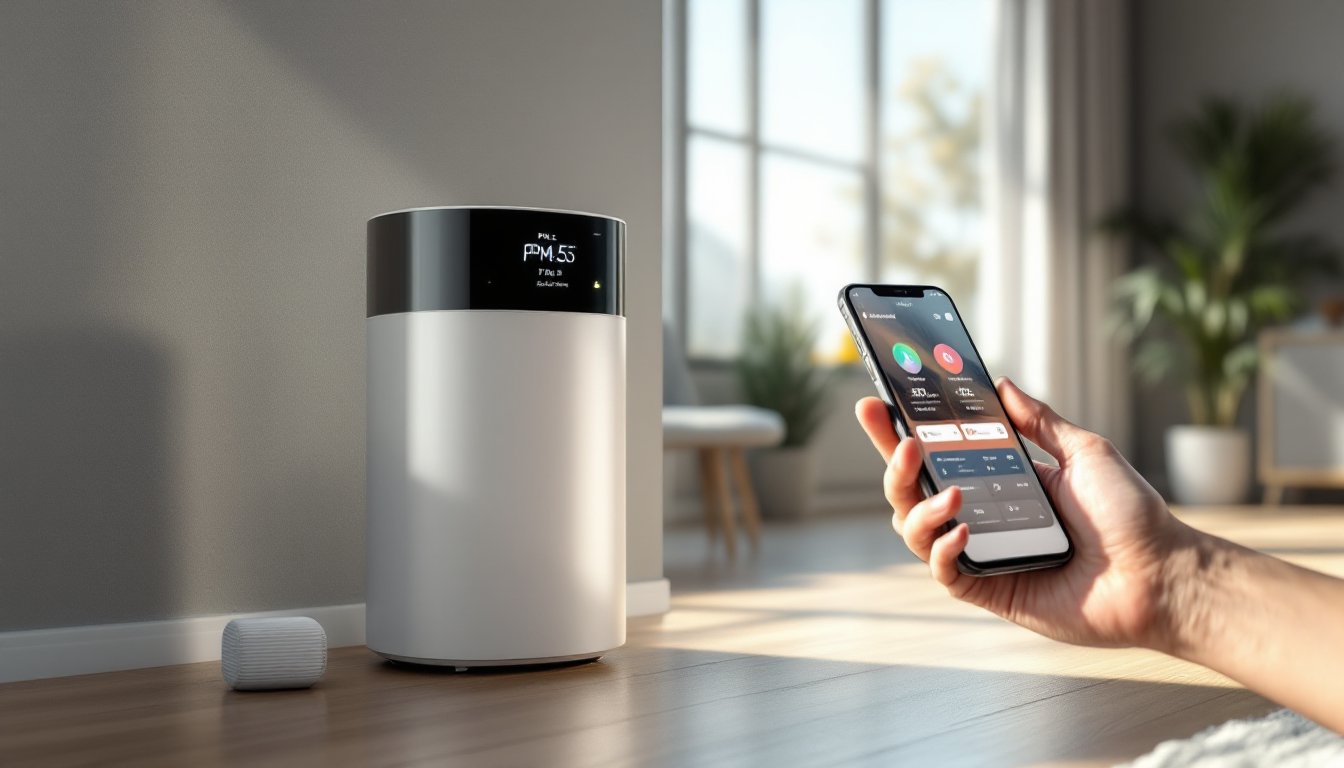

Indoor air quality directly affects respiratory health, allergies, and overall comfort, yet most people overlook it until a problem becomes obvious. Smart air purifiers bridge the gap between old-school filtration and modern convenience, giving homeowners real-time data and remote control through their phones. Unlike traditional units that sit passively in a corner, today’s best smart air purifiers monitor air quality in real time, adjust fan speed automatically, and integrate with home automation systems. Whether dealing with pet dander, pollen, or urban smog, choosing the right smart air purifier means understanding filtration standards, connectivity options, and room-size compatibility. This guide cuts through marketing noise and focuses on what actually matters when selecting a unit for your home.
Key Takeaways
- The best smart air purifier combines true HEPA filtration, real-time air quality monitoring, and smart home integration to deliver both health benefits and convenience.
- Real-time PM2.5 and air quality sensors allow automatic fan adjustments and remote control, preventing inefficiency while saving money on energy costs over time.
- Size your smart air purifier to your room’s square footage using CADR ratings—a unit rated too high will waste energy and create unnecessary noise.
- Consider long-term filter costs as part of your total investment, since replacement filters can range from $40–100 and need changing every 6–12 months.
- Ensure your smart air purifier integrates with your existing home automation platform (Apple HomeKit, Google Home, or Alexa) for seamless voice control and scheduling.
- Pet owners and allergy sufferers benefit most from multi-stage filtration with pre-filters and activated charcoal that address dander, pollen, and odors beyond basic HEPA capture.
What Makes a Smart Air Purifier Worth Your Money
A smart air purifier justifies its higher upfront cost through two core value propositions: actionable air quality data and automated response. Unlike passive filters, smart units measure PM2.5, PM10, VOC (volatile organic compounds), and CO2 levels in real time, then display this data on your phone and adjust filtration strength automatically. This intelligence saves money long-term because the unit doesn’t run at full blast 24/7, it ramps up only when needed.
The difference between a standard purifier and a smart one often comes down to the sensor array and connectivity. A basic unit might clean air adequately but provides no feedback: you’re guessing whether it’s working or when to replace the filter. Smart models alert you via notifications when replacement filters are due, preventing the costly mistake of running a clogged filter that destroys efficiency.
For allergy sufferers, pet owners, and people in high-pollution areas, real-time monitoring transforms decision-making. If air quality drops unexpectedly, you can boost the purifier remotely or check whether outdoor pollen counts justify running the unit longer. This control is particularly valuable for shift workers or families with varying schedules who can’t supervise indoor conditions constantly.
Key Features to Look For When Choosing a Smart Air Purifier
HEPA Filtration and Air Quality Monitoring
True HEPA filtration is non-negotiable if you’re serious about air quality. HEPA filters capture 99.97% of particles 0.3 microns or larger, a standard set by the U.S. Department of Energy. Don’t confuse this with “HEPA-type” or “HEPA-like” filters, which offer no guaranteed performance. Every purifier should clearly state “True HEPA” or “H13/H14” on the spec sheet.
Look for units that include pre-filters and activated charcoal layers plus to HEPA. Pre-filters catch larger dust and pet hair before reaching the main filter, extending HEPA lifespan. Activated charcoal removes odors, some VOCs, and formaldehyde, factors that basic HEPA alone doesn’t address. Units rated for Clean Air Delivery Rate (CADR) give you measurable performance expectations: higher CADR means faster air cycling per the Association of Home Appliance Manufacturers standard.
Sensor accuracy matters. Look for manufacturers that specify PM2.5 sensor type and measurement range. Some use infrared optical sensors: others use laser-based detection. Laser sensors tend to be more reliable across price points and are standard on premium models.
Smart Home Integration and Mobile Control
Your purifier should connect via Wi-Fi to a proprietary app or widely supported platforms like Amazon Alexa, Google Home, or Apple HomeKit. Voice control transforms usability, you can adjust fan speed without reaching the unit. Integration with home automation routines is a bonus: imagine your purifier automatically boosting when your smart security system detects the front door opening.
Mobile apps should display air quality readings without lag, show filter replacement status, and allow scheduling. Premium models let you set custom thresholds: if PM2.5 exceeds 75 micrograms per cubic meter, the unit automatically shifts to high mode. Scheduling features prevent the purifier from running at full power during sleeping hours, reducing noise and energy waste.
Check whether the manufacturer offers data export and historical tracking. Some apps log hourly air quality, helping you identify patterns, maybe your bedroom degrades right after cooking downstairs, or early mornings show peak pollen.
Comparing Top Smart Air Purifier Models
Dyson Purifier Hot+Cool Formaldehyde leads premium segment with HEPA + charcoal filtration, real-time PM2.5 and NO2/NO measuring, and full HomeKit/Alexa integration. Its appeal is design and dual function (heater/cooler), but replacement filters run $80–100 and need changing every 6–12 months depending on conditions.
Coway Airmega 400S offers excellent value for mid-size homes. It delivers CADR ratings of 340 (smoke), 402 (dust), and 366 (pollen), covers up to 1,560 square feet, and costs roughly half the Dyson. The app is intuitive, filter alerts are reliable, and replacement filters cost $40–50. Real-time PM2.5 sensing is built in, though integration with third-party platforms is limited.
Levoit Core 400S targets budget-conscious buyers. At under $400, it provides HEPA + charcoal, CADR of 208, covers up to 1,095 square feet, and connects to Alexa and Google Home. The app is basic but functional. The main trade-off: slower air cycling and smaller coverage area versus pricier competitors.
Blueair Blue Max excels for very large spaces, covering up to 2,000 square feet with excellent CADR ratings (645 smoke, 718 dust). Smart connectivity is solid, and the filter design is elegant. But, it’s quieter than competitors at high speed, important if placed in bedrooms or living areas.
None of these models require installation: all plug into standard outlets and sit on floors or low tables. Filter replacement is straightforward: slide out the old filter, snap in the new one, reset the counter via the app.
How to Choose the Right Smart Air Purifier for Your Space
Start with room size and CADR ratings. Manufacturers typically list coverage area in square feet. If your bedroom is 180 square feet, a unit rated for 400+ square feet will clean the air 2–3 times per hour (a standard for health benefits). Don’t buy a 1,500-square-foot purifier for a 200-square-foot bedroom, it’ll be overkill, noisy, and wasteful.
Consider your primary air quality concern. Pet owners need strong pre-filtration to capture dander before it coats the HEPA. Allergy sufferers benefit most from units with real-time pollen and PM2.5 tracking. People near highways or in high-pollution cities justify premium models with NOx and ozone sensors. Households with smokers or painters doing interior work need activated charcoal capacity.
Noise levels matter, especially if the purifier lives in your bedroom. Smart units that can schedule quieter operation at night are valuable. Check decibel ratings at different fan speeds: most quality purifiers operate between 22–65 dB depending on mode. At full power, expect 55–65 dB (roughly the sound of a refrigerator or moderate traffic).
Factor in long-term filter costs. A cheaper upfront purchase can become expensive if replacement filters cost $80 every 3 months. Calculate annual filter replacement expense and add it to the purchase price for true cost comparison. Some regional differences apply, dusty climates shorten filter lifespan: clean suburbs may stretch filters to 12+ months.
Finally, ensure the app ecosystem matches your home. If you’re deep in Apple HomeKit, prioritize HomeKit certification. Android users should confirm Google Home compatibility. Skip models with proprietary ecosystems unless they offer features (like advanced PM2.5 thresholds) worth the lock-in.
Conclusion
The best smart air purifier for your home balances filtration performance, smart features, and cost-of-ownership. Prioritize true HEPA filtration, accurate air quality sensing, and integration with your existing smart home platform. Budget a few hundred dollars for the unit itself, then plan for consistent filter replacement every 6–12 months. Size the purifier to your room, bigger doesn’t always mean better, and test the app before committing. With the right model running on a smart schedule, you’ll breathe easier knowing your indoor air quality is monitored and optimized automatically.