
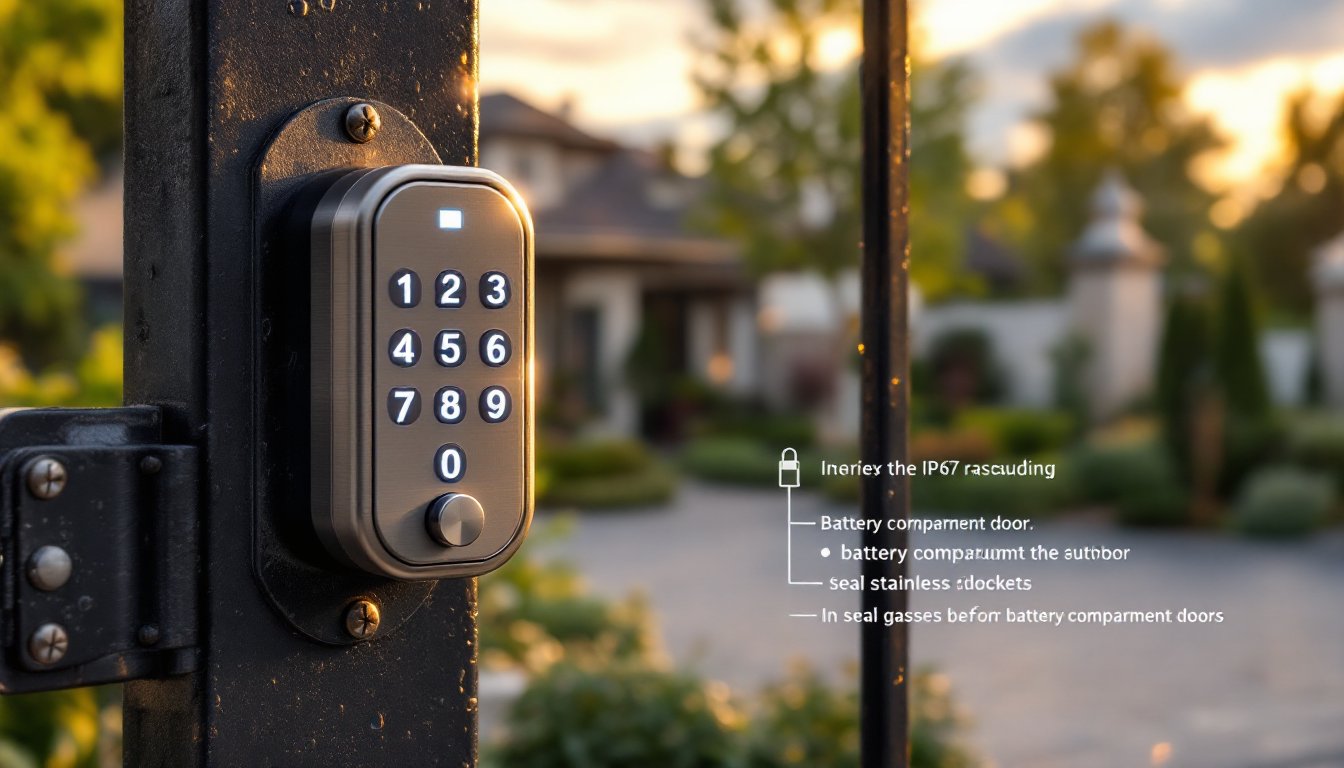

Securing the front gate used to mean a padlock and a key ring. Today’s homeowners have better options. Smart gate locks combine convenience with genuine security, letting residents unlock gates via smartphone, keypad, or biometric access, no fumbling in the dark. But not every smart lock thrives outdoors, where weather, salt air, temperature swings, and corrosion pose real threats. This guide cuts through the marketing noise to help you choose a weatherproof smart gate lock that actually works when it matters, covers installation reality, and explains what features genuinely improve your home’s access control versus bells and whistles that fade when the sun does.
Key Takeaways
- A smart lock for outdoor gates provides practical security by controlling the first chokepoint of your property while eliminating key fumbling and enabling remote access tracking.
- Prioritize IP65+ weather sealing, stainless steel construction, and multiple unlock methods (app, keypad, biometric) to ensure your smart gate lock survives coastal salt air, temperature swings, and corrosion.
- Battery life should span 8–12 months on standard batteries; shorter specifications mean twice-yearly replacements in harsh weather, risking unexpected lock failure.
- Measure your gate’s latch type (barrel bolt, rim latch, or pad eye) and use stainless steel fasteners during installation to prevent corrosion from loosening the entire assembly.
- Configure real-time access notifications, time-based scheduling, and a physical backup unlock method to maintain security and avoid being locked out if WiFi or phone batteries fail.
- Verify local building codes for emergency manual release access and fire alarm requirements before installation to avoid costly retrofitting.
Why Smart Gate Locks Are Essential for Modern Home Security
A smart gate lock isn’t luxury, it’s practical security infrastructure. Here’s why they matter for the gate specifically. First, gates are the first chokepoint for your property. A burglar or unwanted visitor encounters the gate before reaching the house, so controlling access there stops problems early. Second, traditional padlocks and keys create friction. You’re fumbling with chains, testing multiple keys, sometimes leaving locks open to invite guests inside. Forget a key? Time to climb the gate or walk the long way around. Smart locks eliminate that friction while adding accountability, you can see who accessed the gate and when, creating an audit trail.
Third, outdoor gates see heavy use from contractors, deliveries, housekeepers, and family members. Instead of distributing physical keys, you grant temporary codes or app access, revoke it remotely, and track everything. If a delivery driver loses a key, no problem, delete their access. A contractor overstays? You know exactly when they entered and left.
Fourth, gates themselves are transition points where smart security makes the most difference. Unlike interior locks, gates integrate with perimeter sensors, video intercoms, and lighting systems. A smart gate lock can trigger notifications, unlock simultaneously with driveway gates, or integrate with home automation routines. The convenience and security feedback loop creates real peace of mind that a mechanical padlock never could.
Key Features to Look for in a Durable Outdoor Smart Lock
Smart gate locks fail when manufacturers treat them as indoor products shrunk down for exterior use. The best outdoor models start with engineering for the environment, not features added as afterthoughts.
Weather Resistance and Material Quality
IP ratings matter here, look for IP65 or higher. IP65 means dust-tight and protected against water jets from any angle: IP67 adds brief submersion tolerance: IP68 handles sustained water exposure. For a gate in a coastal area, IP67 minimum is practical. The lock’s casing should be die-cast aluminum or stainless steel, not plastic. Plastic handles temperature swings poorly and cracks in sun and cold. Stainless steel (especially 316 grade) resists salt-air corrosion: aluminum needs anodizing to protect against oxidation.
Check seals carefully. The keypad area, battery compartment, and internal electronics should sit behind multiple gasket layers. Water ingress kills smart locks faster than any other failure mode. Drainage holes in the bottom let standing water escape rather than pooling inside. Battery housings deserve extra scrutiny, batteries leak in sealed cavities, so look for designs that let you swap batteries without opening the main housing or that use sealed, replaceable cartridges.
Temperature range specifications tell you how the lock behaves seasonally. Most solid outdoor locks operate from -4°F to 122°F. Below freezing, mechanical components stiffen, and electromagnetic solenoids draw more current. Some locks go wider: up to 140°F in direct sun or down to -22°F for harsh climates. If you live somewhere extreme, that specification isn’t cosmetic, it’s the difference between a lock that works in winter and a useless brick.
Access Control and Unlock Methods
No single unlock method works perfectly for gates. The best locks offer redundancy. Smartphone apps let you unlock remotely, which is convenient but requires reliable WiFi or Bluetooth range to the lock. Dead battery in your phone? You’re stuck. Numeric keypads work offline and are fast for frequent users, but weathered buttons become hard to read, and password sharing loses audit trails. Biometric readers (fingerprint or facial) work offline and can’t be forgotten, but they struggle in extreme cold and dirty conditions, muddy fingers don’t register reliably.
The smartest setups combine methods. For example, a lock with a keypad plus mechanical override key (hidden or with backup codes) plus an app covers most scenarios. Avoid locks that rely solely on app-based unlocking without a physical backup. WiFi can go down: your gate shouldn’t become a prisoner’s fence.
Access scheduling is valuable for gates. Set time windows so housekeepers can only unlock between 9 a.m. and 5 p.m., or grant weekend-only access to family members. Some locks integrate with platforms like Apple HomeKit, Google Home, or Alexa, letting you unlock by voice if you’re nearby and authenticated. Real-time notifications tell you when someone unlocks the gate, which is crucial for security and useful for knowing when guests arrive.
Battery life directly affects reliability. A quality outdoor smart lock should run 8 to 12 months on four AA or AAA batteries. If specs promise only 4-6 months, you’re changing batteries twice yearly in weather, messy and easy to forget until the lock fails. Some premium models use rechargeable batteries or draw so little power they last 18+ months. Low-battery alerts give you advance notice, not a surprise failure.
Installation and Setup Considerations
Before buying, measure your gate’s hardware. Smart locks aren’t universal, they fit specific latch types. Most gates use a barrel bolt, rim latch, or pad eye system. Barrel bolts (the rod-style fasteners found on wooden gates) require a lock that wraps around or replaces the bolt entirely. Rim latches (the curved metal hook found on metal gates) need a lock that engages from the outside. Pad eyes (metal rings bolted to the gate) accept padlock-style bodies or cable-lock designs. Measure the bolt diameter, the gate thickness, and the spacing of existing hardware, a photo sent to the manufacturer’s support team usually clarifies compatibility in minutes.
Mounting surface matters for reliability. The lock should bolt through the gate or frame, not screw into wood. If your gate is wood, pre-drill holes slightly undersize and use stainless steel bolts, not wood screws. The fasteners will rust and corrode, eventually loosening the entire assembly. Corrosion is the silent killer of gate installations. Use stainless washers and lock washers under bolt heads. If bolts corrode into the wood, removing the lock next spring becomes a nightmare.
Power source is critical. Most outdoor smart locks run on four AA or AAA batteries, with backup power for the solenoid (the electromagnet that retracts the bolt). Some models add solar charging to extend battery life, useful in sunny climates. WiFi-enabled models need power continuously for the radio, which drains batteries faster than Bluetooth-only locks. If your gate is far from the house, a Bluetooth-only lock might outlast a WiFi version by months.
Setup involves connecting the lock to your home WiFi network (if applicable), installing the app, and configuring access for household members. Most modern locks pair easily, but older phones or routers can cause frustrating pairing loops. Test the lock thoroughly after installation, unlock it from inside the app, outside with the keypad, and with backup codes. Try it from your front door, driveway, and a neighbor’s house to confirm range. In winter, test again: cold affects Bluetooth and WiFi signal strength. If remote access doesn’t work at 20 feet in summer, expect it to fail at 10 feet in January.
Final point: check local building codes. Many jurisdictions require gates to have manual emergency release access, a quick way to unlock from inside if power fails or someone needs emergency exit. Smart locks need visible instructions for this. Some codes mandate that gates unlock automatically during fire alarms. Verify requirements with your local building department before installation: retrofitting an emergency release after the fact is frustrating.
Conclusion
A smart gate lock solves real problems when chosen with outdoor durability and practical redundancy in mind. Prioritize IP65+ weather sealing, stainless steel construction, long battery life, and multiple unlock methods over flashy features. Measure your gate hardware, install with stainless fasteners, test thoroughly before relying on it, and confirm local code compliance. Done right, a smart gate lock streamlines access, improves security tracking, and saves years of key fumbling in the rain.