
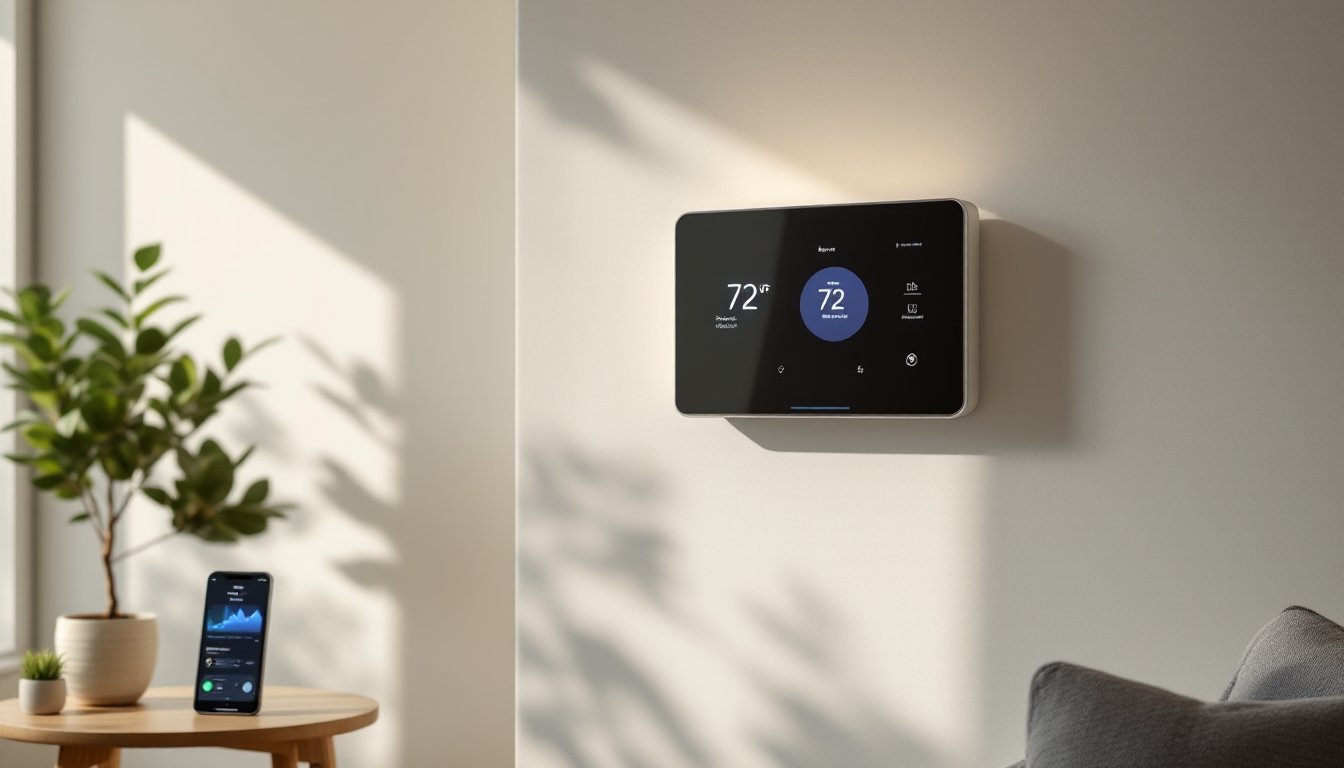

Homeowners are increasingly turning to smart home technology to simplify daily life, and the thermostat is often the first logical upgrade. A Bryant smart thermostat puts precise climate control at your fingertips, whether you’re at home or miles away. Unlike basic programmable models that require manual tweaking, a Bryant smart thermostat learns your habits, adjusts automatically, and connects seamlessly with other smart devices. For DIYers comfortable with basic electrical work, installation is straightforward on most systems. Even if you’re upgrading an older HVAC setup, compatibility options exist. This guide walks through what makes Bryant smart thermostats worth the investment, how they work, and whether they’re the right fit for your home.
Key Takeaways
- A Bryant smart thermostat learns your habits and automatically adjusts temperature, delivering 10–15% annual savings in heating and cooling costs compared to basic programmable models.
- Bryant smart thermostats offer native compatibility with Bryant and Carrier HVAC equipment, ensuring plug-and-play setup and access to advanced diagnostics without configuration headaches.
- Installation is DIY-friendly for most homeowners with existing C-wire thermostats, requiring just 15 minutes and basic tools, though older systems without a C wire may need professional help.
- Advanced features like adaptive recovery, occupancy detection, weather intelligence, and geofencing eliminate heating or cooling waste and adapt seamlessly to changing schedules and conditions.
- The mobile app and voice control integration with Alexa and Google Assistant allow remote temperature adjustments, maintenance alerts, and automated geofencing for away/home modes.
- Energy reports and equipment runtime statistics on the thermostat display help identify efficiency leaks early and support demand-response programs that reduce both utility bills and grid strain.
What Makes Bryant Smart Thermostats Stand Out
Bryant, a heritage brand under the Johnson Controls umbrella, has built its reputation on reliable HVAC equipment. Their smart thermostats extend that reliability into the connected home space. What sets Bryant apart isn’t flashy marketing, it’s integration with the broader Bryant and Carrier equipment ecosystem. If your furnace, air conditioner, or heat pump carries the Bryant badge, a Bryant smart thermostat works with native compatibility, meaning fewer configuration headaches and faster setup.
The thermostats offer intuitive touchscreen interfaces without overwhelming users with options. Bryant focuses on function over aesthetic trends: these aren’t statement pieces, but solid performers that blend into any wall. Homeowners report straightforward setup, reliable connectivity, and responsive customer support. For those already invested in Bryant HVAC equipment, switching thermostats becomes a natural upgrade path rather than a risky gamble on an unfamiliar ecosystem.
Key Features And Technology
A Bryant smart thermostat includes features designed to simplify climate control without requiring constant adjustment. Adaptive recovery learns how long it takes your system to reach a target temperature, so it starts heating or cooling at the right moment, no more coming home to an uncomfortable house. Occupancy detection uses motion sensors and smartphone location data to infer whether anyone’s home, reducing heating or cooling when the house is empty.
Weather intelligence pulls local forecast data and adjusts settings proactively. A cold snap coming tonight? The thermostat can prepare earlier. Scheduling is flexible: you can set different temperatures for weekdays, weekends, and specific times without wrestling with a clunky interface. Humidity control options help balance comfort and efficiency, particularly useful in humid climates where air conditioning wastes energy fighting excess moisture.
The thermostat displays equipment runtime statistics, filter status reminders, and energy usage trends directly on its screen. This transparency helps you spot problems early, for instance, if your furnace runs far longer than normal, it might signal a clogged filter or declining efficiency worth investigating.
Mobile App And Remote Access
The Bryant mobile app (iOS and Android) is the thermostat’s nervous system for remote access. Adjust temperature from your car, check settings before you leave for vacation, or disable the system if you realize you left a window open. Push notifications alert you to maintenance needs, like filter changes or equipment faults.
Multi-user support means your spouse, adult children, or trusted housekeepers can adjust settings without needing a shared password. Geofencing automatically shifts the thermostat to away mode when everyone leaves the house and back to comfort settings when the first person arrives. Voice control works with Alexa, Google Assistant, and other popular platforms, a nice convenience if you’re already using smart speakers throughout your home.
Energy Savings And Efficiency
Smart thermostats don’t reduce energy usage through magic: they reduce it through consistency and responsiveness. A programmable thermostat sitting in a closet doesn’t adapt when plans change. A Bryant smart thermostat does. Studies from HVAC manufacturers and utility companies consistently show 10–15% annual savings in heating and cooling costs when homes switch from manual or basic programmable control to smart thermostats. Your actual savings depend on your local climate, insulation quality, air sealing, and how disciplined you were with the old thermostat.
The real win comes from eliminating waste: no more heating an empty house because you forgot to adjust the setback, no more running the AC at 68°F when 72°F would feel just fine in the morning. Energy reports show you exactly where that usage goes, helping identify leaks in efficiency. If your heating bills spike suddenly, the thermostat logs runtime data, useful information to share with an HVAC technician.
Bryant thermostats support demand-response programs in areas where utilities offer them, automatically adjusting settings during peak pricing hours. This requires enrollment through your utility provider, but it’s a passive way to reduce both bills and grid strain. Combine smart thermostat management with other efficiency upgrades, like attic insulation, air sealing, or high-efficiency equipment replacement, and your energy savings multiply.
Installation And Compatibility
Installation difficulty depends on your current setup. If you already have a programmable thermostat with a C wire (common wire), a fifth wire that provides 24V power year-round, swapping to a Bryant smart thermostat is straightforward: a 15-minute job for most homeowners. Turn off the breaker, photograph your existing wiring, disconnect the old thermostat, and connect the new one following the wiring diagram provided. Most hardware comes standard: you’ll need a wire stripper and a Phillips screwdriver. No permit required.
Complexity rises if your older thermostat lacks a C wire. The thermostat will still function using power harvesting (drawing minimal power from the heating/cooling signal wires), but reliability suffers in dual-fuel setups (heat pump plus furnace backup). Running a new C wire means fishing wire through walls, a task best handled by an electrician, typically $150–300 in labor. If running new wire isn’t feasible, Bryant and Carrier sell C wire adapters that generate the necessary power, though they’re a workaround rather than ideal.
Compatibility with Bryant and Carrier HVAC equipment is native: setup is plug-and-play. Compatibility with other brands varies. Lennox, Trane, and most generic systems work, but you’ll bypass native equipment diagnostics and may lose advanced features. Always check the compatibility list before purchasing. If you’re unsure about wiring or your system’s configuration, hire an HVAC technician for the installation. A $150 professional install beats a $2,000 replacement if something goes wrong.
User Experience And Smart Home Integration
The thermostat’s interface is deliberately simple. A large touchscreen displays current temperature, setpoint, and mode (heat, cool, auto, off). Swiping up and down adjusts temperature in 1°F increments: pressing a button switches modes. Unlike some competitors that hide controls deep in menu trees, Bryant puts the essentials front and center. For users who prefer physical buttons, models exist without touchscreens, a smart choice if you value tactile feedback and worry about screen durability in households with kids or pets.
Integration with smart home platforms makes sense for homes already running multiple connected devices. Bryant thermostats work with home automation platforms like SmartThings and Home Assistant, enabling automation routines. Imagine a scene triggered by “good morning” that warms your house, opens blinds, and starts the coffee maker, all coordinated by your smart thermostat as the climate anchor. But, don’t assume integration is automatic: some platforms require additional configuration or third-party bridges.
The app’s interface is clean without being trendy. You won’t feel lost navigating settings. Historical data, graphs showing your temperature and energy use over days, weeks, and months, appears in accessible charts rather than confusing dashboards. If you’re the type who enjoys optimizing efficiency and understanding your home’s behavior, this transparency is genuinely useful. If you prefer “set and forget,” auto-adaptive features handle the thinking for you.
Conclusion
A Bryant smart thermostat is a practical upgrade for homeowners looking to gain control over HVAC operation, cut energy waste, and integrate climate management with other smart devices. Installation is DIY-friendly on most systems, and the learning curve is minimal. If you own Bryant or Carrier equipment, compatibility is seamless. Even on other systems, the thermostat delivers solid performance and reliable connectivity. The combination of energy savings, convenience, and honest engineering makes it a smart investment for homes ready to move beyond manual temperature control.