
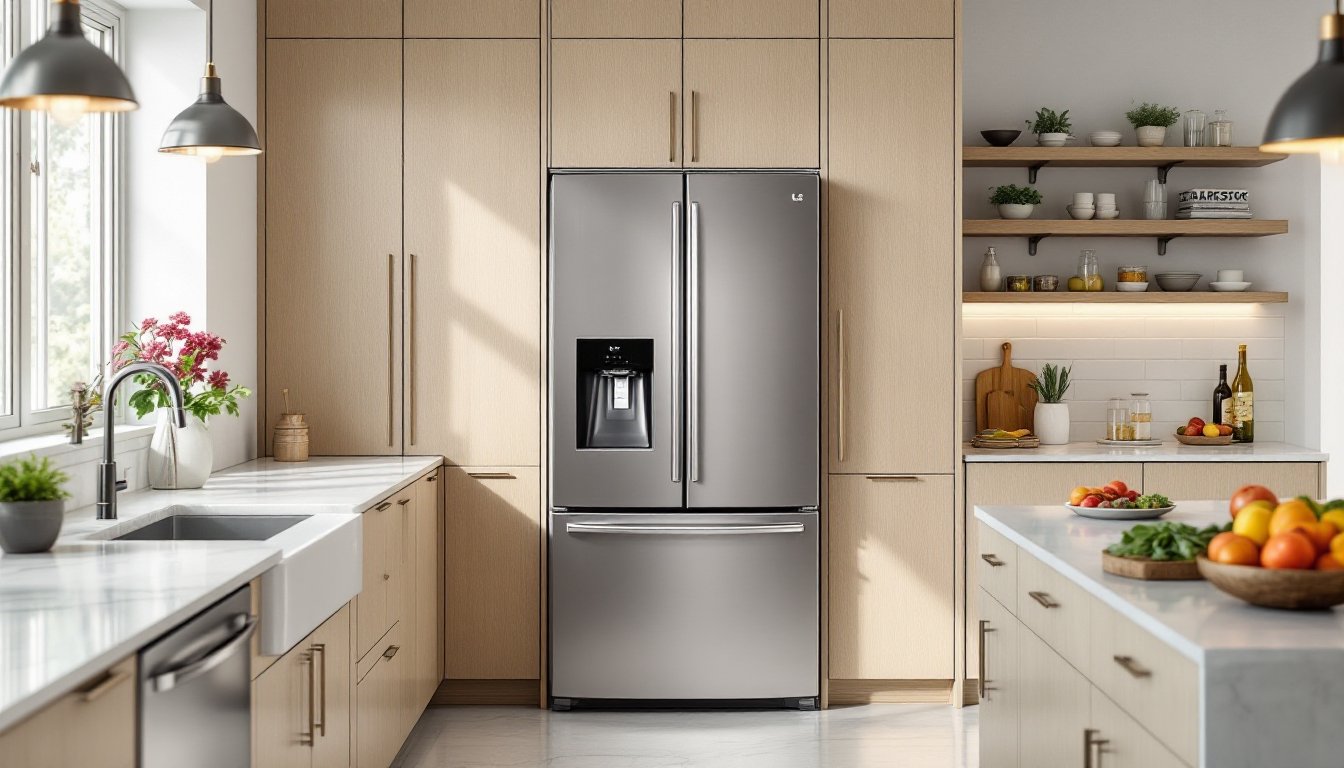

The kitchen refrigerator isn’t just an appliance, it’s often the most-used and most-visible fixture in the home. For DIYers and homeowners planning a kitchen refresh or remodel, choosing the right fridge matters. The LG 27 cu. ft. smart counter-depth Max French door refrigerator sits at the intersection of form and function, designed to fit flush with standard cabinetry while delivering premium storage, intuitive smart controls, and reliable cooling. This review breaks down what this model offers in terms of real-world performance, installation practicality, and whether the investment makes sense for your kitchen footprint and lifestyle.
Key Takeaways
- The LG 27 cu. ft. smart counter-depth Max French door refrigerator fits flush with standard cabinetry while delivering 27 cubic feet of storage, making it ideal for kitchen remodels that prioritize seamless design integration.
- Counter-depth installation requires precise measurements (±½ inch tolerance) and careful planning for water line hookup, so measure your opening twice and consider hiring a professional if your cabinetry is uneven or older.
- The inverter compressor and dual-evaporator system maintain consistent temperatures (34–38°F in fridge, 0°F in freezer) with minimal fluctuation, reducing food waste and ice crystal formation on frozen items.
- ENERGY STAR® certification and variable-speed compressor technology keep annual operating costs around $90–130, with efficiency gains becoming more significant over 10–15 years in high-electricity-cost regions.
- Smart features like the LG ThinQ app, interior camera, voice control, and SmartDiagnosis™ add convenience for connected kitchens, though they’re optional for reliable daily operation.
- The 10-year sealed system warranty and thoughtful storage design (adjustable glass shelves, humidity-controlled drawers, pull-out freezer basket) justify the premium investment for homeowners planning long-term kitchen upgrades.
Design and Counter-Depth Styling
Counter-depth refrigerators are built to align flush with standard kitchen cabinetry, rather than protruding several inches like traditional full-depth models. The LG 27 cu. ft. version maintains this sleek profile while maximizing internal volume, a challenge that requires careful engineering. The exterior finish is stainless steel with a PrintProof™ coating that resists smudges and fingerprints, which matters if you’re living with kids or simply tired of constant wiping.
The French door design splits the fresh-food compartment in half, with dual doors that swing open independently. This reduces the air displacement when grabbing items, which is better for food preservation than a single wide door. The bottom freezer drawer pulls out smoothly on full-extension slides, making it easier to access buried items without bending as far as you would with a traditional bottom-freezer layout.
Dimensionally, expect roughly 32 to 33 inches in width and 68 to 70 inches in height, depending on the exact trim kit and feet configuration. Measure your opening carefully, counter-depth models leave minimal clearance, and if your kitchen has uneven cabinets or out-of-plumb walls (common in older homes), you may need shims or custom trim. Plan for at least 2–3 hours of installation time, and consider hiring a professional if your cabinetry is particularly tight or if you’re uncomfortable working with gas line connections if a water dispenser and ice maker are involved.
Smart Features and Connectivity
The LG 27 cu. ft. model includes Wi-Fi connectivity and integrates with the LG ThinQ mobile app, allowing remote control and monitoring from your phone. You can adjust temperature settings, receive alerts if the door is left open, and check what’s inside using an interior camera, assuming you have decent home Wi-Fi signal in the kitchen.
Internally, the fridge runs an inverter compressor that adjusts cooling speed based on demand, reducing energy waste during light-load periods. SmartDiagnosis™ is included, which uses an audio-based system to help troubleshoot issues and connect to LG support without opening the unit. It’s a practical feature if you encounter problems mid-repair-project and want expert eyes remotely.
Voice control through Alexa or Google Assistant is supported, so you can ask for settings adjustments without touching the panel. The display touchscreen on the door is intuitive but can be a fingerprint magnet, wipe it down regularly to maintain readability. For a kitchen-focused smart home, these features add convenience, though they’re not essential for the fridge to function reliably.
Storage Capacity and Interior Organization
Twenty-seven cubic feet breaks down into approximately 17 cu. ft. in the refrigerator section and 10 cu. ft. in the freezer. In practical terms, that’s enough to stock a household of four with room to spare, including weekly groceries and some frozen meal prep.
The fresh-food section features adjustable glass shelves (real glass, not flimsy plastic) that can be repositioned at 1-inch intervals. Slide-out drawers for produce and deli items reduce humidity zones, humidity control is essential for keeping lettuce crisp and cheese at optimal texture. The door bins are wide and shallow, perfect for bottles, condiments, and dairy products: they don’t eat into the main shelf space the way deep door storage can.
The freezer drawer includes an upper shelf, divider bars, and a pull-out basket, thoughtful design that prevents the “black hole” effect where items get buried and forgotten. Unlike upright freezers where you stack everything vertically, drawers make it easier to see what’s stored and prevent frost-burned surprises six months later. The ice maker is automatic and integrated, though you’ll need to run the water line during installation, a straightforward but important detail if you’re retrofitting a kitchen without existing fridge plumbing.
Cooling Performance and Food Preservation
The inverter compressor and dual-evaporator system are engineered to maintain consistent temperatures across both sections without frost transfer between them. The fridge section typically runs at 34–38°F, while the freezer holds 0°F or below, industry-standard temperatures that align with food safety guidelines from the USDA.
Linear cooling (a technology LG emphasizes) reduces temperature fluctuations, which slows ice crystal formation on frozen items and keeps fresh produce at stable conditions longer. In real-world use over weeks and months, this translates to less food waste, your salad doesn’t wilt as fast, and frozen meals don’t develop ice-crystal degradation as quickly.
The fridge includes a fresh-air filter (typically rated for 6 months) to reduce odors. You’ll want to keep a backup on hand to avoid forgetting to replace it mid-month. LG’s warranty covers the sealed system (compressor and refrigerant lines) for 10 years, which is solid reassurance if a major cooling component fails. For corner cases like power outages, the unit can maintain safe temperatures for up to 48 hours if left unopened.
Energy Efficiency and Operating Costs
The LG 27 cu. ft. counter-depth Max is ENERGY STAR® certified and uses roughly 750–850 kilowatt-hours per year, depending on ambient kitchen temperature and how often the doors open. At an average U.S. residential electricity rate of $0.12–0.15 per kWh, that translates to roughly $90–130 annually in operating costs, not dramatically different from a standard-depth model of comparable size, but the counter-depth design’s compactness helps.
The inverter compressor is a key efficiency driver: it runs at variable speeds rather than cycling on and off fully, much like a car’s variable transmission. This reduces energy waste during periods of low cooling demand, such as late evening or when ambient kitchen temperature is cool.
If energy costs in your region are significantly higher (California, Northeast), the efficiency gains become more noticeable over a 10–15 year lifespan. A mid-range refrigerator of the same size might use 950+ kWh annually, widening the operational cost gap. Factor this into your ROI: the premium price of a smart, efficient model often breaks even over time if you plan to keep the fridge for a decade or longer.
Installation, Maintenance, and Warranty
Installation is where counter-depth models demand attention. The unit ships with a trim kit for finished cabinetry, but your cabinet opening must be within ±½ inch of the specified dimensions. If your kitchen was built before modern standards (pre-1990s), cabinet openings can vary, and you may need custom paneling or adjustable filler strips.
Water and ice maker hookup requires 1/4-inch copper or plastic tubing run from your cold-water supply line. If your kitchen doesn’t have existing fridge plumbing, running a line under or behind cabinetry is doable as a DIY task, but you’ll need a saddle valve, compression fittings, and access to the water main or an existing supply line. If you’re not confident with plumbing connections, hire a plumber, a bad connection can cause leaks inside walls or cabinets.
Power delivery should use a dedicated 15-amp circuit per NEC standards. Your electrician or home inspection notes will confirm whether your kitchen panel can support this. After installation, allow the fridge to sit unplugged for 4–6 hours before powering on: tilting or moving compressors can disturb internal oils, and letting them settle prevents damage.
Maintenance is straightforward: replace the water filter every 6 months, vacuum the condenser coils annually (they’re usually accessible from the back or bottom), and wipe seals to prevent mold or mildew. LG’s standard warranty covers parts and labor for one year: the sealed system (compressor, tubing, evaporator) is covered for ten years. This is competitive with other premium brands.
Conclusion
The LG 27 cu. ft. smart counter-depth Max French door refrigerator is a solid choice if you’re renovating a kitchen and value seamless cabinet integration, reliable cooling, and smart home convenience. Its strengths lie in thoughtful storage design, efficient operation, and the engineering that packs volume into a shallow footprint. Installation requires attention to measurements and plumbing, but it’s manageable for a careful DIYer or straightforward for a professional installer. If kitchen aesthetics and modest energy savings matter in your decision, this model delivers on both fronts.